
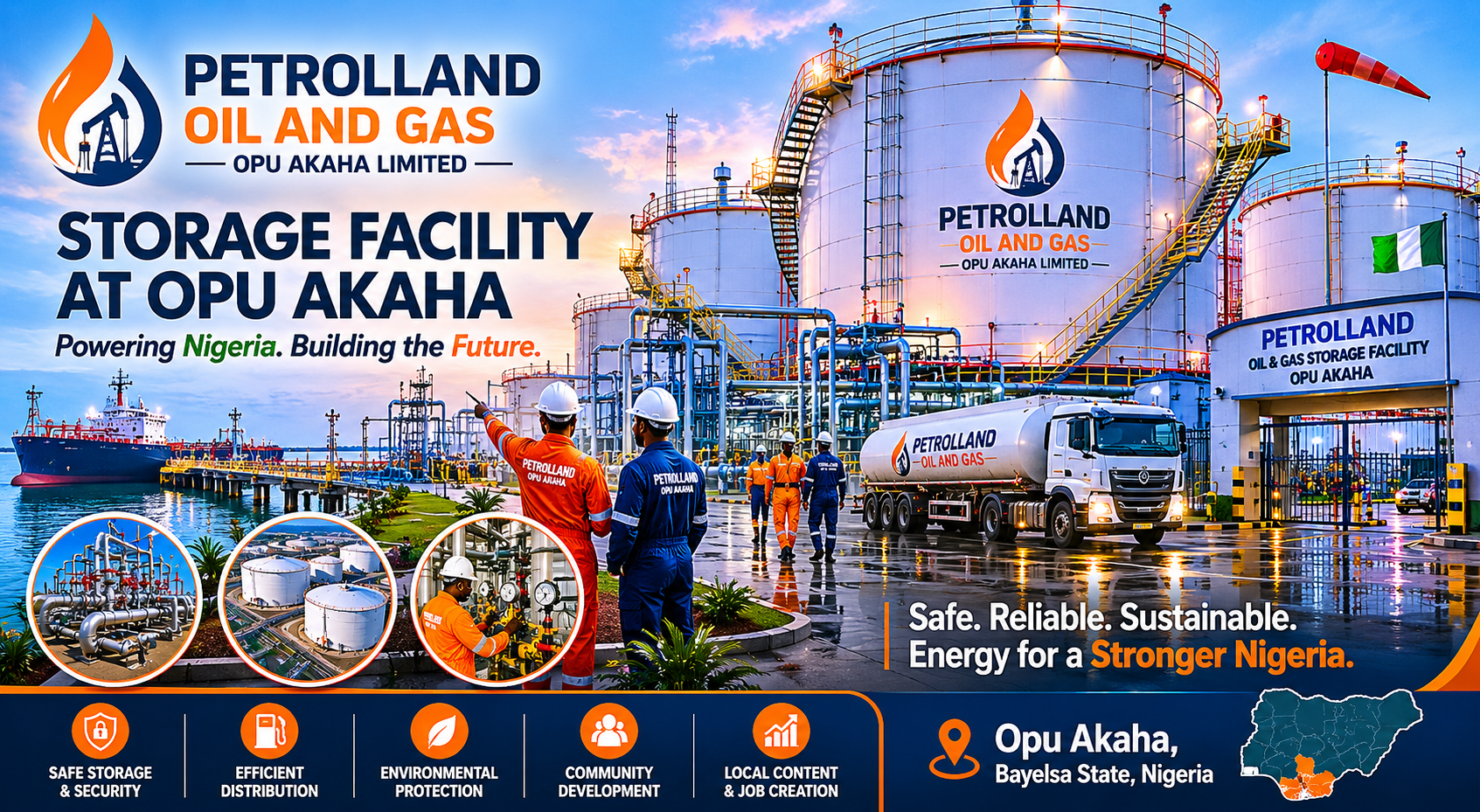
PETROLLAND OIL AND GAS STORAGE FACILITY – OPU AKAHA
The Petrolland Oil and Gas Storage Facility at Opu Akaha is a proposed midstream infrastructure development project under Petrolland Oil and Gas Opu Akaha Limited, designed to strengthen Nigeria’s petroleum storage, distribution, and energy logistics capacity within the Niger Delta region. The facility is envisioned as a strategic energy asset that will support product storage, bulk handling, and efficient distribution of refined petroleum products to surrounding communities and industrial users.
The core objective of the storage facility is to provide a secure, modern, and scalable tank farm infrastructure that enhances fuel availability, reduces supply chain bottlenecks, and improves regional energy stability. In Nigeria, storage facilities play a critical role in the downstream petroleum sector by serving as buffer systems between import terminals, refineries, and retail distribution networks. This project is therefore positioned as a critical infrastructure intervention within Bayelsa State and the broader Niger Delta energy corridor.
The proposed facility will be designed in line with international safety, environmental, and operational standards, including fire suppression systems, spill containment structures, automated loading systems, and environmental protection mechanisms. These systems are essential in ensuring safe handling of petroleum products such as PMS (petrol), AGO (diesel), and other refined derivatives commonly stored and distributed within Nigeria’s downstream sector.
A key function of the Petrolland Storage Facility is to support regional fuel distribution efficiency. Nigeria’s petroleum logistics sector is often affected by congestion, long-distance haulage inefficiencies, and supply instability. By situating a storage hub within Opu Akaha, the project aims to reduce dependency on distant depots, improve delivery timelines, and enhance fuel accessibility for surrounding communities and industrial operations.
The facility is also intended to serve as a strategic reserve and emergency supply buffer, ensuring that fuel shortages or distribution disruptions can be mitigated through localized stock availability. This aligns with global best practices in energy infrastructure management, where decentralized storage improves resilience and energy security.
From a development perspective, the project is structured to generate direct and indirect employment opportunities. During the construction phase, jobs will be created in civil engineering, welding, logistics, electrical installation, and environmental services. Once operational, the facility will require personnel in operations management, safety compliance, product handling, transport coordination, and administrative support. This contributes to local economic empowerment and skills development in the host community.
In addition to employment generation, the project is expected to stimulate local business growth and industrial activity. Auxiliary services such as transportation companies, maintenance contractors, security services, and supply vendors will benefit from the presence of the facility. This multiplier effect is a key justification for midstream infrastructure development in oil-producing regions.
Environmental responsibility is a central consideration in the design of the facility. The project will integrate environmental impact mitigation systems, including groundwater protection measures, vapor control systems, and emergency response protocols. Compliance with Nigerian environmental regulations and international ESG standards will be required to ensure sustainable operation and community safety.
The storage facility is also aligned with broader industry trends in Nigeria’s oil and gas sector, where companies are increasingly investing in large-scale tank farms and integrated logistics hubs to improve efficiency and reduce distribution losses. Similar developments across the country have demonstrated that modern storage infrastructure significantly improves supply chain stability and reduces product scarcity in downstream markets.
The implementation of the Petrolland Storage Facility is expected to follow a phased development approach. The initial phase will focus on site preparation, engineering design, and regulatory approvals. The second phase will involve construction of storage tanks, loading systems, and safety infrastructure. The final phase will include commissioning, operational testing, and integration into regional distribution networks.
Governance of the facility will be managed under Petrolland Oil and Gas Opu Akaha Limited, with oversight structures ensuring compliance with regulatory authorities such as the Nigerian Midstream and Downstream Petroleum Regulatory Authority (NMDPRA). Operational transparency, safety reporting, and environmental monitoring will be key components of the governance framework.
In conclusion, the Petrolland Oil and Gas Storage Facility at Opu Akaha represents a strategic energy infrastructure initiative aimed at strengthening petroleum storage capacity, improving regional fuel distribution efficiency, and contributing to the economic development of Bayelsa State. Through modern engineering design, environmental compliance, and community-focused development, the project positions itself as a long-term asset within Nigeria’s evolving energy landscape.